

Starting out as an electrician in South Africa
Honestly if you're thinking about jumping into electrician work here it's one of those trades that always needs people. From what I've seen loads of guys get into it after school or after trying something else first. Pay can be decent once you get some experience under your belt but starting out means learning the ropes properly.
Thing is you can't just grab tools and call yourself qualified. There's rules and you need to follow them or you end up in trouble. Most start with a basic course then move into apprenticeships that last a few years.
How to get qualified without the headaches
Look I know a few people who did the N1 to N3 courses at a college. That gets your basics down. Then finding a company willing to take you on as an apprentice is the next step. It's not always easy but if you show you're reliable you'll land something.
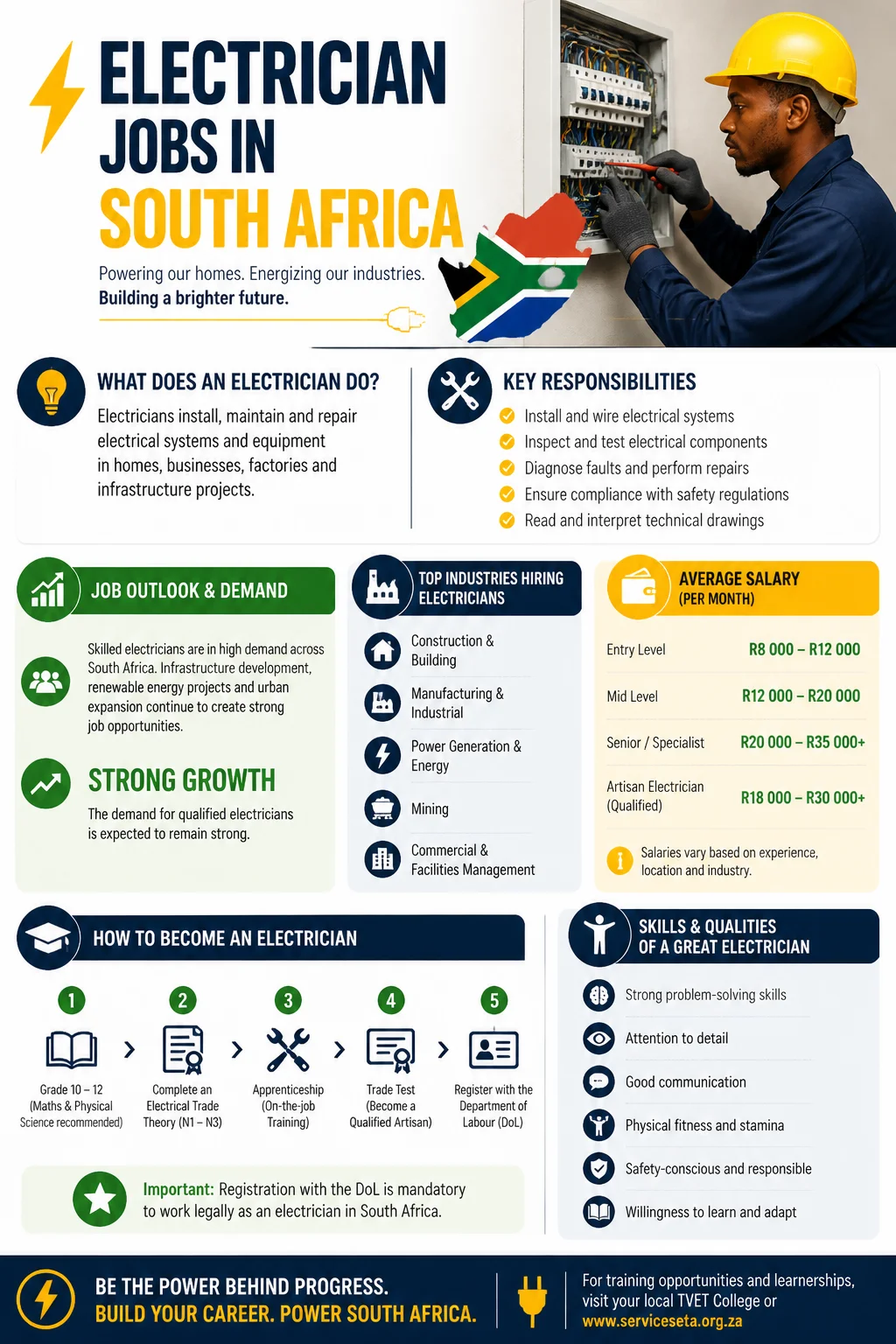
And once you're qualified you can go for your trade test. Passing that opens doors to better gigs. Some skip college altogether and learn on the job but that route takes longer and you might miss some theory stuff.
Real talk the demand stays high because houses need wiring and factories need maintenance guys. Rural areas especially struggle to find skilled hands so moving around can pay off.
What the money looks like these days
Entry level pay hovers around fifteen to twenty five thousand rand a month. With a few years experience that jumps to thirty five thousand or more. Some independent guys make even better if they build a steady client list for house calls.
But overtime and call outs make the difference for many. Night shifts or emergency work adds up fast. It's not glamorous but it beats sitting in an office all day.
From my experience benefits like medical aid pop up more often with bigger firms. Smaller outfits might pay cash in hand but you handle your own taxes and stuff.
Finding the right opportunities
Job sites are full of listings but networking works better sometimes. Ask around at supply shops or chat with other sparks on sites. Word of mouth gets you in faster than online applications.
Big construction projects in Gauteng and the Cape pull in lots of workers. Mining towns need guys too though the hours can be rough. Keep your eye on contracts that include accommodation if you're willing to relocate.
Don't forget about solar installs either. That's growing quick and electricians who know inverters are getting snapped up.
Here's the thing some companies want you to have your own bakkie and tools already. That costs money upfront so budget for it if you're going solo.
Daily reality on the job
Mornings often start early with site checks. You might spend hours troubleshooting why something blew or running new cables through tricky spots. It's physical work so staying fit helps.
Safety gear isn't optional. Hard hats gloves and proper boots save lives when you're dealing with live wires. I've seen shortcuts lead to bad accidents so don't skip checks.
Evenings could mean paperwork or quoting for next jobs. Clients want fast service but quality matters if you want repeat business.
- Always double check your work
- Keep learning new tech like smart home systems
- Build good relationships with suppliers for better prices
Big difference between a guy who just shows up and one who explains things clearly to homeowners. That builds trust and referrals.
Challenges you should know about
Load shedding still messes with schedules. Projects get delayed and customers get frustrated. Having a generator or backup plan helps but it's extra cost.
Competition from unqualified people undercuts rates sometimes. They do shoddy work and it makes the rest of us look bad when things go wrong later.
Weather plays a role too. Working outside in summer heat or winter rain isn't fun but it comes with the territory.
Honestly speaking staying updated on regulations saves you from fines. The industry changes and ignoring updates bites you later.
Wrapping up your search
If this sounds like your kind of thing start with the basics. Get that training sorted and find an apprenticeship. South Africa needs more reliable electricians so the work is there if you're willing to put in the effort.
Stick with it and you'll build something solid. Just go in with eyes open about the ups and downs.