

Getting Started with Welder Jobs
So you're looking at welder jobs in the United States and wondering where to even begin. From what I've seen, it's not as complicated as some make it sound but it does take some hustle. Honestly speaking, welding can pay well if you pick the right spots and stick with it.
Big cities aren't always the best bet. Smaller industrial towns often have more steady work. Thing is, you gotta know the types of welding they're hiring for too.
Pay and Hours in Different States
Texas and Louisiana pull in decent money for welders right now. I've heard guys clearing six figures with overtime on pipeline work. But the hours can wear you down fast. Not gonna lie, those 60 hour weeks add up quick.
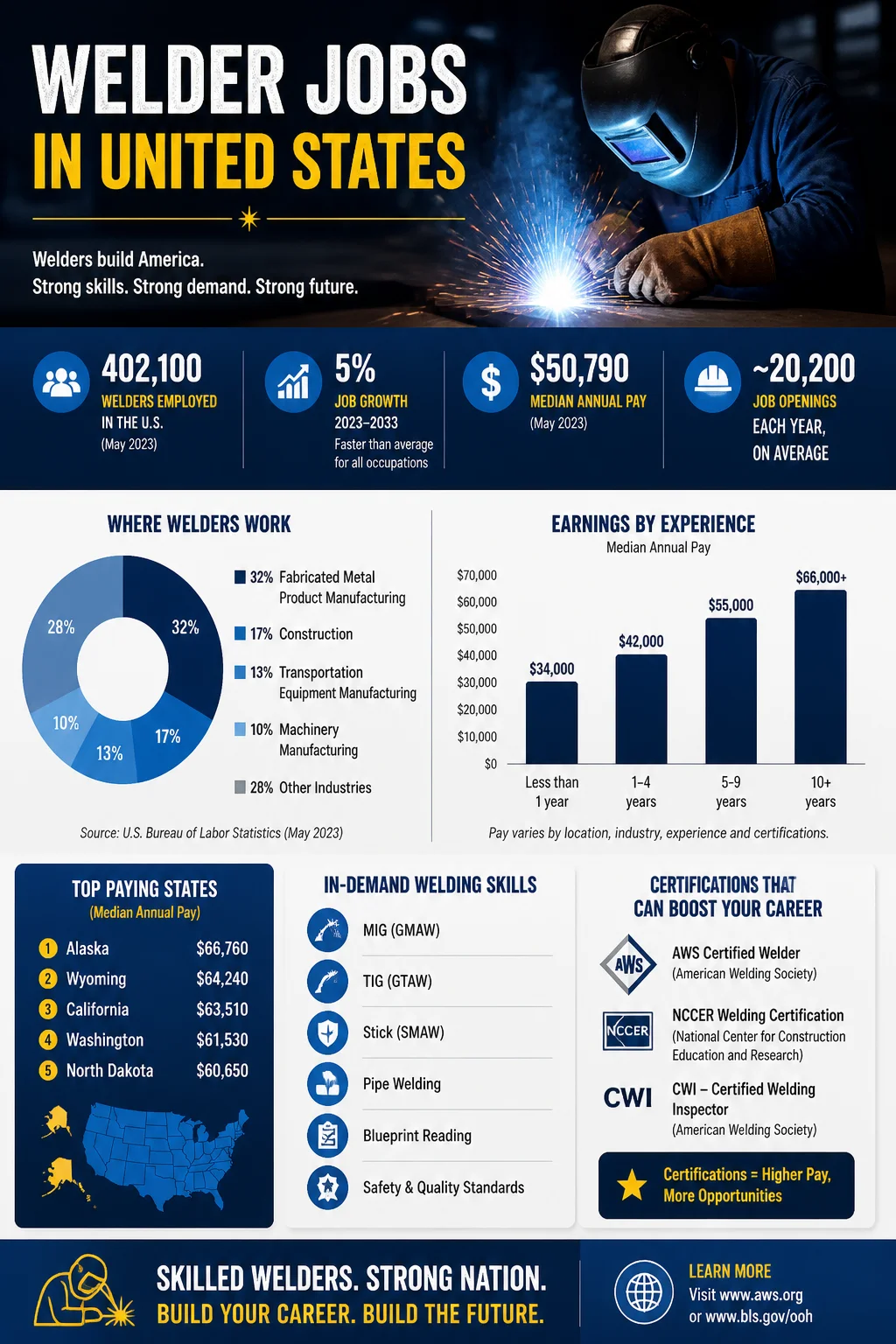
California has higher hourly rates on paper. Yet the cost of living eats most of it. In my experience, Midwest spots like Ohio or Indiana give better balance for families. Short commutes. Real talk, that matters after a long day on the torch.
- Pipeline gigs pay the most but travel a ton
- Shop work stays more predictable
- Shipyards offer solid benefits in coastal areas
And don't sleep on certifications. A good one opens doors faster than years of random experience sometimes.
How to Land the First Gig
Start with local unions or trade schools in your area. They often know who's actually hiring. Online boards work too but filter through the junk carefully. I've wasted time on postings that turned out fake before.
Show up with your own gear if possible. Employers notice that stuff. Practice your welds ahead of any test they throw at you. Simple stuff but it separates folks quick.
Once you're in, ask about apprenticeships. They can fast track skills without debt piling up. Look, not every path needs a fancy degree.
Common Pitfalls New Welders Hit
Some jump into high-pay travel jobs too soon. Burnout hits hard then. Take it slower if you can. Family time disappears fast on the road.
Safety shortcuts are tempting under pressure. Don't. One bad habit can end a career early. From what I've seen, the veterans always stress this.
Keep learning new processes. TIG or MIG skills make you more valuable over time. Sticking to one thing only limits options down the line.