
Company
Confidential
Location
New York, NY
Job type
Contractor
Posted
7 days ago
Via
BeBee
Job description
## Warehouse Picker — Earn Extra Every Shift
• *You move faster and smarter than any machine. That efficiency has value — and now you can get paid for it.**
• Warehouse and logistics operatives are on the European Commission's official list of critical shortage professions. Your skills are in high demand. Record them. Get paid.*
The Observer Programme pays warehouse workers to record their shifts using lightweight smart glasses. You don't change how you work. You do your normal shift — and earn extra on top.
### How it works
• Wear smart glasses (lighter than safety glasses) during your shift
• Record sessions from 30 minutes up
• Spend a few minutes after each session confirming what tasks you did in the app
• Get paid per recorded minute
• All recordings are anonymised — no faces, no voices, no identifying details
### What you'll earn
You're paid per minute of accepted footage — on top of your regular income. Earnings depend on your role and how often you record.
• €15–€18 per recorded hour
• €60–€72 per recording day (based on ~4 hours)
• *€900–€1,100 per month** (based on 20 recording days)
First Observers in your role or region earn a launch bonus. Extra earnings possible through referral bonuses.
### What we're looking for
• 1+ years of experience in warehouse work (picker, packer, goods handler)
• Currently working in a warehouse — employed, agency, or temp
• Hands-on physical work: picking, packing, sorting, loading, unloading
• Smartphone (iOS or Android)
• *All warehouse roles welcome:** manual pick-and-pack, cold chain/frozen, automated warehouse, returns processing, goods-in/goods-out.
### We provide everything
• Smart glasses — shipped to you, pre-configured
• Full onboarding (~30 minutes)
### About the Observer Programme The Observer Programme by Aisthis works with professionals across 100+ trades to document how skilled work actually happens. Your speed, your route knowledge, your handling skills — that's expertise worth recording.
Applications are reviewed with the help of AI. We'll be in touch if there's a match.
• *You move faster and smarter than any machine. That efficiency has value — and now you can get paid for it.**
• Warehouse and logistics operatives are on the European Commission's official list of critical shortage professions. Your skills are in high demand. Record them. Get paid.*
The Observer Programme pays warehouse workers to record their shifts using lightweight smart glasses. You don't change how you work. You do your normal shift — and earn extra on top.
### How it works
• Wear smart glasses (lighter than safety glasses) during your shift
• Record sessions from 30 minutes up
• Spend a few minutes after each session confirming what tasks you did in the app
• Get paid per recorded minute
• All recordings are anonymised — no faces, no voices, no identifying details
### What you'll earn
You're paid per minute of accepted footage — on top of your regular income. Earnings depend on your role and how often you record.
• €15–€18 per recorded hour
• €60–€72 per recording day (based on ~4 hours)
• *€900–€1,100 per month** (based on 20 recording days)
First Observers in your role or region earn a launch bonus. Extra earnings possible through referral bonuses.
### What we're looking for
• 1+ years of experience in warehouse work (picker, packer, goods handler)
• Currently working in a warehouse — employed, agency, or temp
• Hands-on physical work: picking, packing, sorting, loading, unloading
• Smartphone (iOS or Android)
• *All warehouse roles welcome:** manual pick-and-pack, cold chain/frozen, automated warehouse, returns processing, goods-in/goods-out.
### We provide everything
• Smart glasses — shipped to you, pre-configured
• Full onboarding (~30 minutes)
### About the Observer Programme The Observer Programme by Aisthis works with professionals across 100+ trades to document how skilled work actually happens. Your speed, your route knowledge, your handling skills — that's expertise worth recording.
Applications are reviewed with the help of AI. We'll be in touch if there's a match.
Frequently asked questions
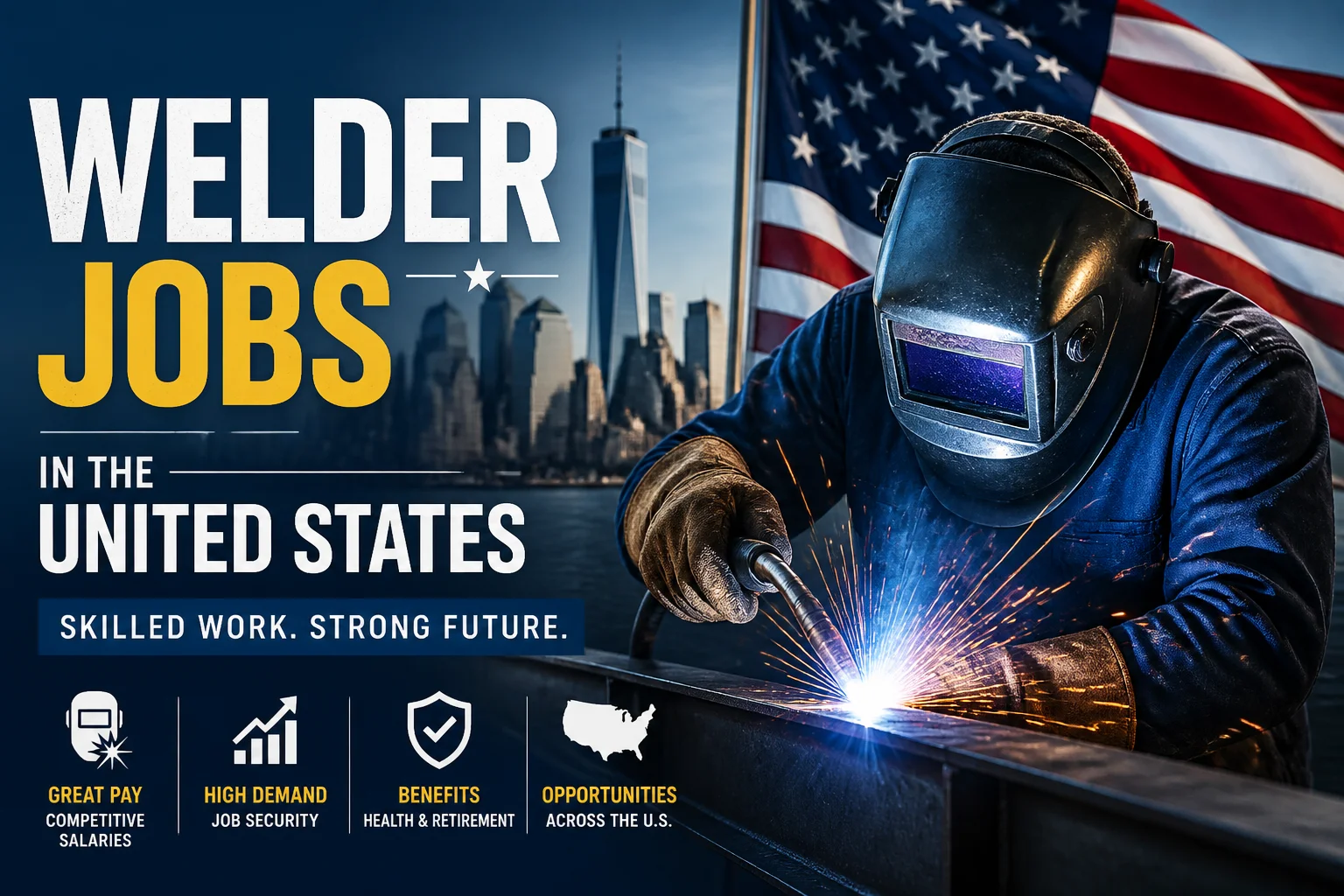
Quick answers about Welder Jobs
Q
What is the median hourly wage for welders in the United States as of January 2026 including overtime rates?
The Bureau of Labor Statistics reports the median hourly wage for welders at $28.45 as of January 2026 with time-and-a-half overtime required after 40 hours under FLSA rules. Welders in manufacturing earn an additional $4.20 per hour on average for night shifts. Annual median earnings reach $59,176 for full-time roles.
Source: U.S. Bureau of Labor Statistics
Q
How many hours per week can welders legally work in the United States without overtime pay in 2026?
The U.S. Department of Labor sets the standard workweek at 40 hours with overtime at 1.5 times the regular rate required after that threshold in 2026. Welders on federal contracts receive double time for hours over 48 in a workweek. Paid sick leave of up to 56 hours annually applies under the Families First Coronavirus Response Act extensions.
Source: U.S. Department of Labor
Q
What education and experience are required to qualify for welder jobs in the United States in 2026?
The Bureau of Labor Statistics states a high school diploma plus 6-12 months of postsecondary welding training or apprenticeship is required for 2026 entry-level positions. Three years of documented experience is mandatory for structural welding roles under AWS D1.1 standards referenced by DOL. Certification in SMAW or GMAW processes must be completed before hire.
Source: U.S. Bureau of Labor Statistics
Q
What documents are required to apply for welder positions through U.S. Department of Labor registered apprenticeships in 2026?
Applicants must submit Form ETA-671, high school transcripts, and proof of U.S. work authorization to DOL-registered programs by March 2026 deadlines. A valid driver's license and negative drug test results from a SAMHSA-certified lab are mandatory. Background checks via FBI fingerprinting are required for nuclear or pipeline welding tracks.
Source: U.S. Department of Labor