

Plumber Jobs in South Africa right now
Thing is, plumbing work never really slows down here. Pipes burst, toilets clog, new houses go up all the time. If you're handy and don't mind getting dirty, this trade keeps paying the bills.
From what I've seen in Johannesburg and Durban, a lot of guys start out helping on sites then move into their own van work. Pay varies though.
How much do plumbers actually earn?
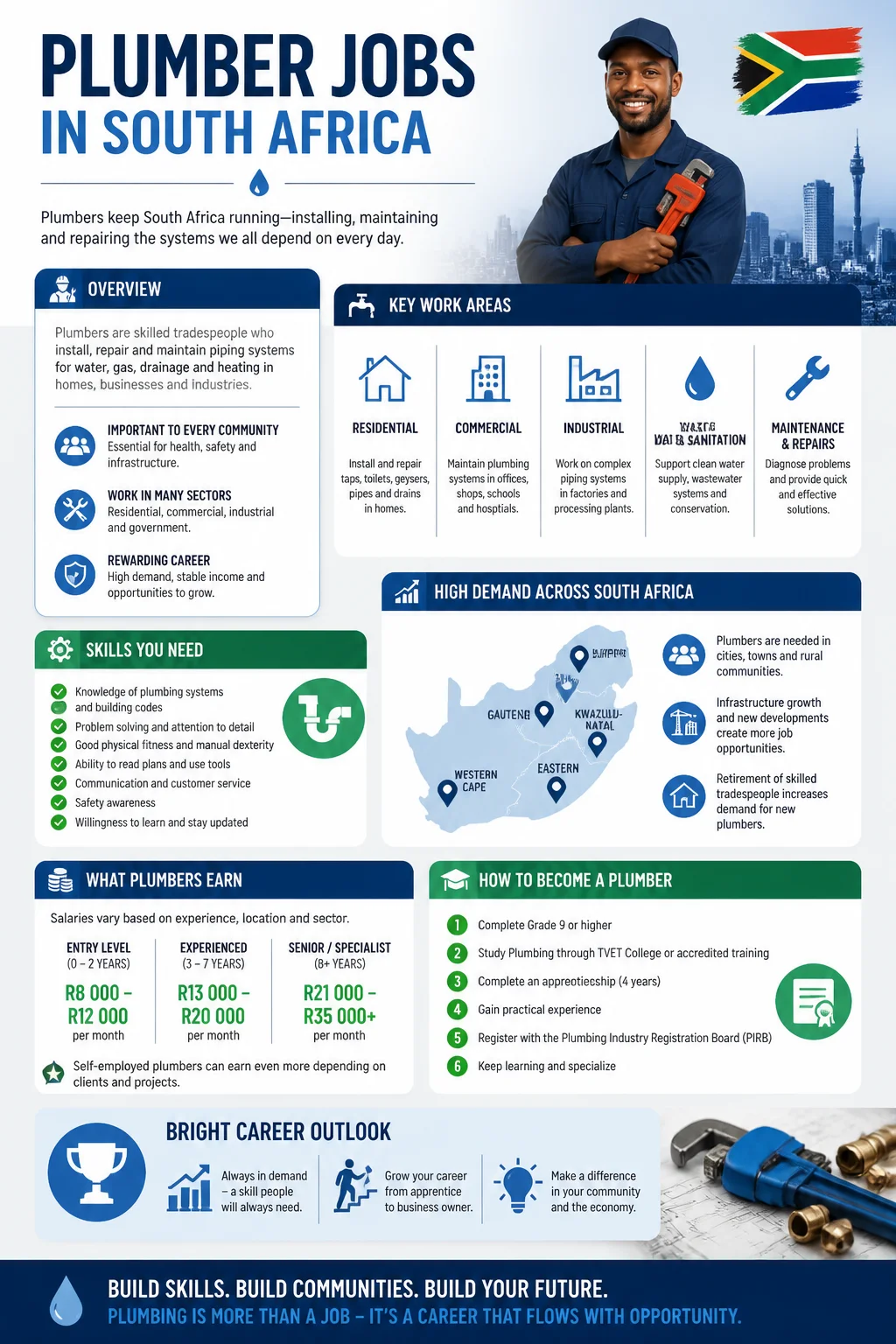
Entry level helpers pull around R12,000 to R18,000 a month. Qualified plumbers with a few years in can hit R25,000 to R35,000 pretty steady. The ones who run their own business and take emergency calls after hours make more, sometimes a lot more.
Big difference between city work and smaller towns. Cape Town and Pretoria have more steady commercial jobs while rural areas lean toward house calls and repairs.
- Residential stuff pays okay but can be hit and miss
- Commercial contracts feel more reliable month to month
- Emergency call-outs add nice extra cash on weekends
Honestly speaking, overtime and after hours work is where the real money sits. People call at 2am when water's spraying everywhere and they pay whatever it takes.
Getting qualified without wasting years
You don't need a fancy degree. Most start with a learnership or apprenticeship through a registered company. That usually runs 3 to 4 years with both classroom and on-site time.
Once you pass your trade test you're set. Red Seal helps if you ever want to move provinces or even work overseas later.
Some guys skip the long route and do short courses first just to get basic skills and start earning sooner. Not ideal long term but it gets you in the door.
Where the jobs actually are
Johannesburg and surrounding areas always seem to have openings. Construction never stops there. Cape Town has steady demand too, especially in the suburbs with older houses needing upgrades.
Durban and Port Elizabeth pop up with port-related work and new developments. Smaller places like Bloemfontein or Polokwane have fewer listings but less competition when something does come up.
And yeah, plenty of work in townships and informal settlements too. Different kind of jobs but constant need.
Look at sites like Indeed or PNet for listings. Facebook groups for local trades sometimes post faster than the big boards.
Day to day reality of the work
It's physical. You're on your knees, in tight spaces, sometimes in the heat or rain. Not everyone sticks with it.
But the freedom once you're qualified is real. You decide your hours more than most office folks do. Many plumbers I know work four days and take Friday off when they want.
Tools cost money upfront. Good spanners, drain machines and a solid bakkie make a difference. Start cheap and upgrade as jobs come in.
Customer service matters more than people admit. Show up on time, explain what went wrong and don't overcharge and you'll get repeat calls and referrals.
Common questions people ask
Is it safe? Mostly, if you follow basic rules and watch for dodgy wiring or gas lines. Experience teaches you quick.
Can women do it? Of course. A few are already running their own small teams around Joburg.
What if the economy dips? Plumbing still happens. People always need working water and drains.