

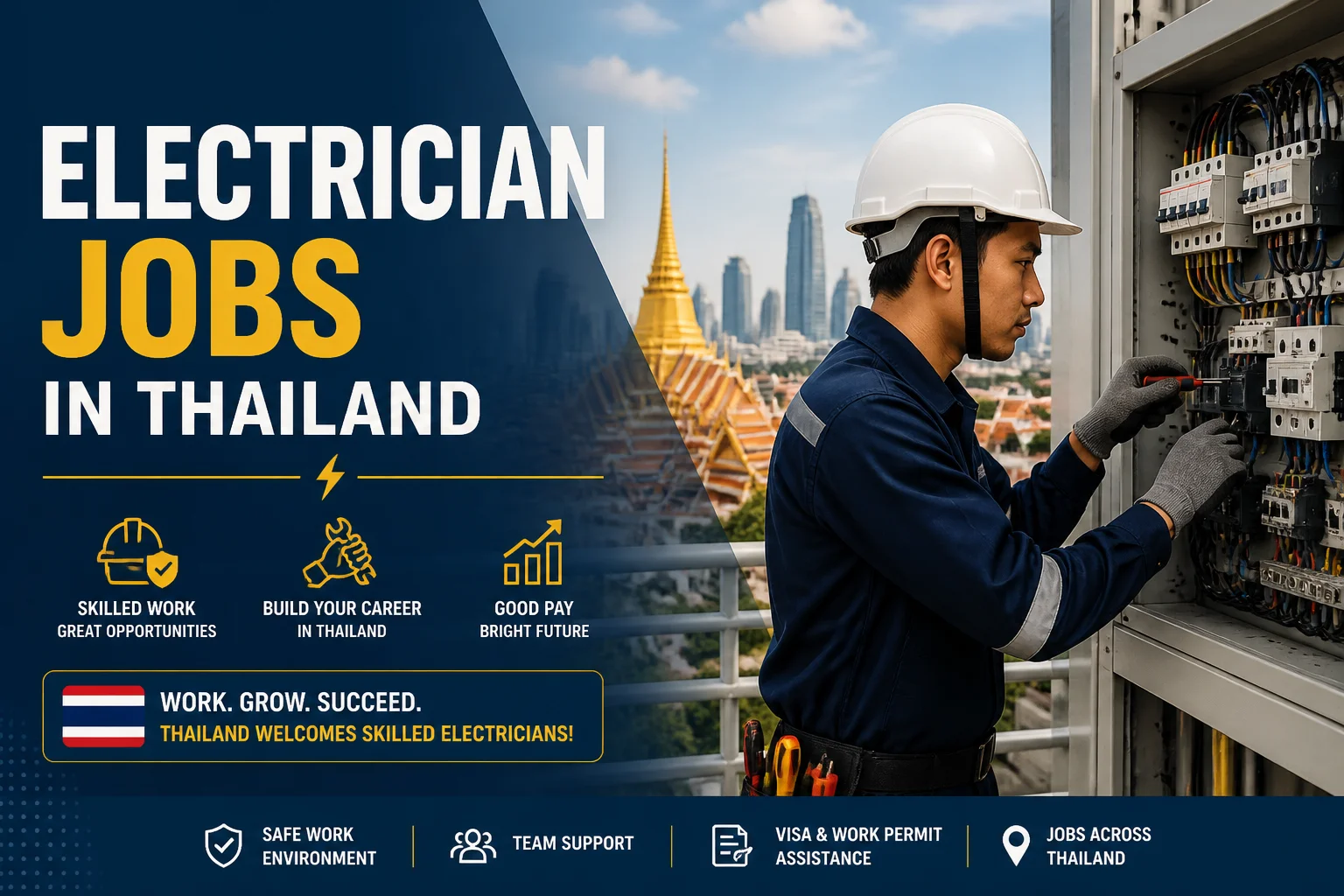
Electrician jobs in Thailand can be a solid way to make a living if you're handy with wiring and don't mind the heat. From what I've seen working around Bangkok for a few years, there's always demand in construction and maintenance.
Pay and what to expect day to day
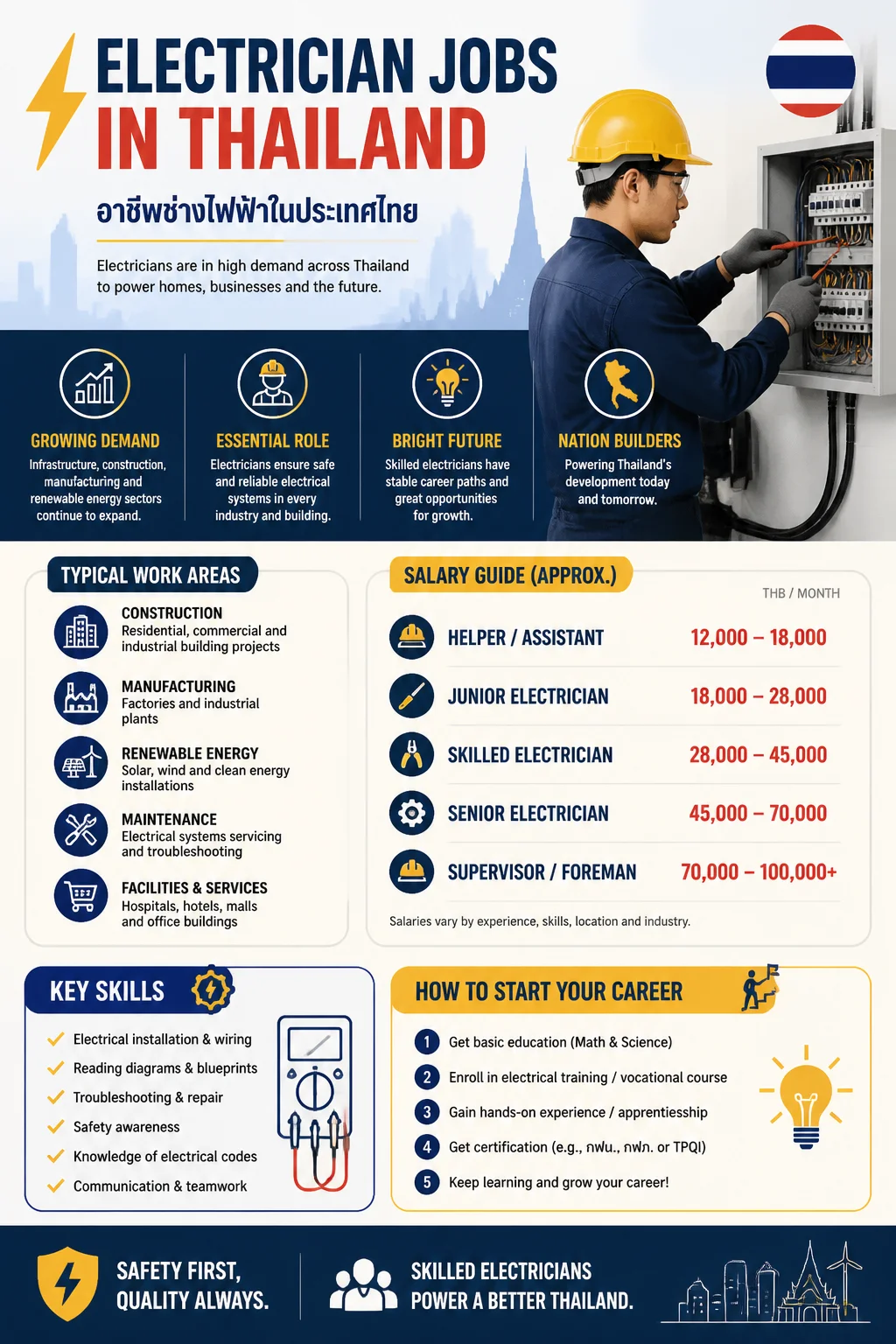
Most guys start around 25,000 to 35,000 baht a month for basic roles. Experienced ones pull in 50k plus with overtime or if they handle bigger commercial sites. Thing is the hours run long sometimes, especially when a project deadline hits. But you get to work outside a lot and the team vibe is usually pretty chill once you know the crew.
Not gonna lie, the monsoon season makes some days rough. Rain pours and you're still climbing ladders. In my experience folks who speak a bit of Thai get better gigs faster because clients trust you more.
Finding the right spot for you
Bangkok has the most openings, no surprise there. Pattaya and Phuket pull in plenty too because of all the resorts and new builds. Look at job boards like JobThai or Facebook groups for expat electricians. Word of mouth still works best though. Ask around at supply shops and you'll hear about openings before they're posted.
Requirements aren't crazy strict. You need some certification or proof you know your stuff. Thai labor rules want safety training too. If you're foreign you'll need a work permit. That's the part that trips people up most.
Visa and permit basics
Business visa first then convert once you have the job offer. Employers usually help with the paperwork but it costs and takes a couple weeks. Honestly speaking, smaller companies skip it sometimes but that leaves you exposed. Big firms handle everything clean.
And don't forget the skills test some places run. They want to see you wire a panel or troubleshoot on the spot. Practice a few common Thai setups if you're coming from abroad.
Training options around the country
Local tech schools in Chiang Mai and Bangkok offer short courses. Six months can get you the basics. Online stuff helps with theory but hands-on is what counts here. I did a refresher course last year and it opened doors to better contracts.
Tools matter too. Bring your own meter and strippers. Local markets sell decent gear cheap but quality varies. Keep your stuff locked up on site.
Daily life on the job
Teams often start early to beat the afternoon heat. Lunch is long and shared. Rice and spicy stuff most days. You'll pick up some Thai fast just from chatting with helpers.
Benefits depend on the company. Some throw in housing or transport. Health coverage is hit or miss. Ask straight up during interviews.
Challenges you should know
Language barrier shows up when reading specs or dealing with inspectors. Safety standards can be loose compared to back home. Always double check grounding yourself. Heat exhaustion sneaks up quick if you're not drinking enough water.
Big difference between residential and industrial work. Factories pay better but the rules are tighter and shifts can be odd.
Where things are heading
With all the new infrastructure projects demand should stay steady. Solar installs are picking up too. If you learn those systems you'll stay busy.
Real talk though, it's physical work. Your back and knees take a hit after years. Pace yourself and use help when lifting panels.
Networking at supply houses and trade events keeps leads coming. People remember the guy who shows up on time and does clean work.