


So you're eyeing carpenter jobs in India
Thing is, it's not all fancy furniture and clean workshops like you see in videos. From what I've seen in places like Mumbai and smaller towns in UP, a lot of it starts with basic site work. You show up, measure twice, cut once. And sometimes the wood fights back.
Honestly speaking, demand stays steady. Houses keep going up. Offices need fixes. Even after the whole pandemic thing, folks still want custom doors and shelves that don't fall apart in a year.
Where most people actually find work
Local contractors still rule. They know the reliable guys. But these days you also see listings on sites like Apna and Indeed. Word of mouth beats everything though. One good job and suddenly three more calls come in.
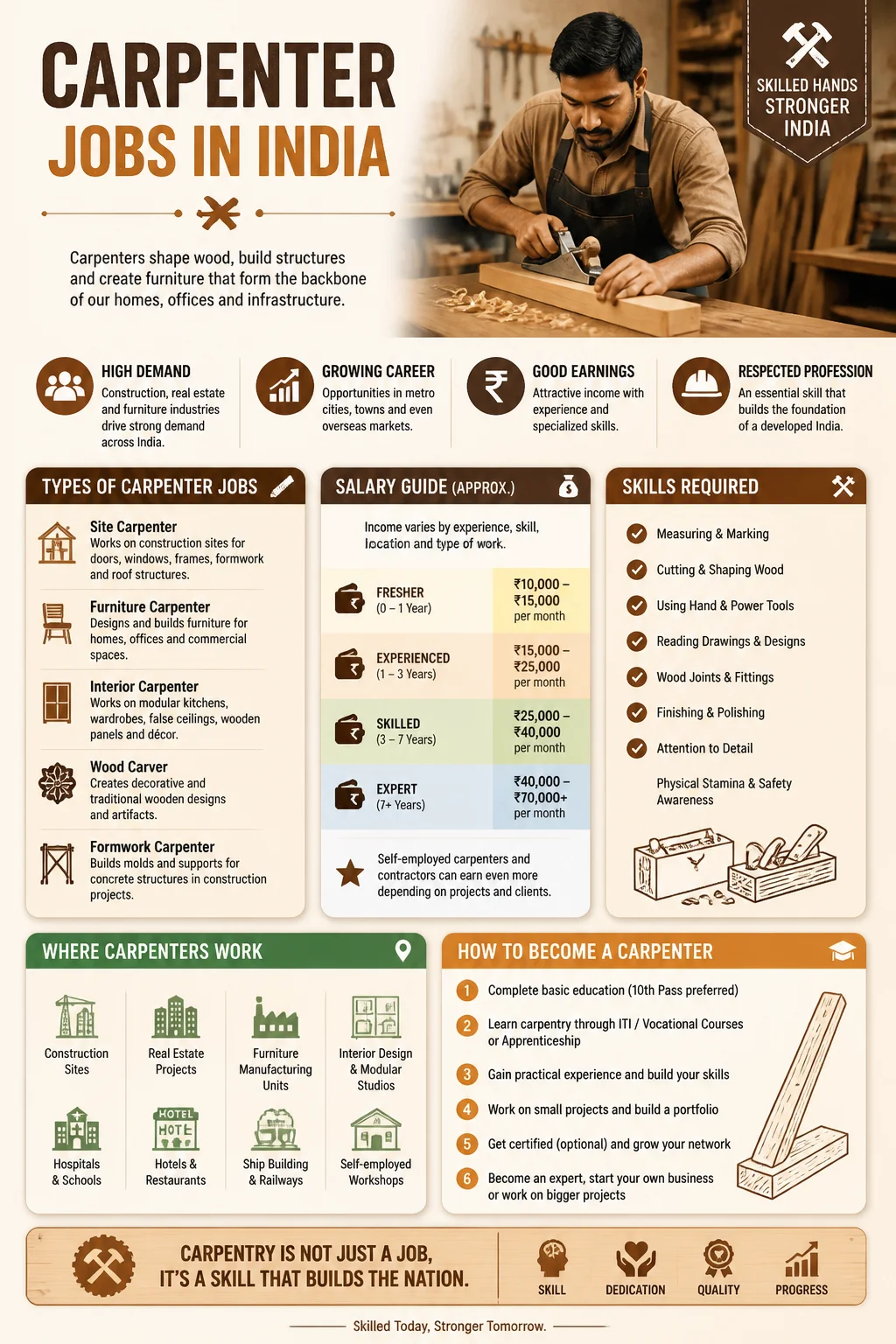
Not gonna lie, starting out means low pay for the first few months. You're learning on the job mostly. I remember a friend who started at 400 a day just hauling plywood and holding levels straight. Now he runs his own small crew.
What skills actually matter day to day
Basic measuring and power tools come first. Then reading simple drawings. But the real edge comes from knowing how to fix mistakes without anyone noticing. Clients don't care about your training certificate half the time. They care if the cabinet opens smooth and stays that way.
And safety? A lot of sites still skip proper gear. Gloves and masks feel optional until something goes wrong. In my experience the experienced carpenters always carry their own basic kit anyway.
- Knowing different wood types helps with pricing
- Basic electrical work for fixtures is a bonus
- Dealing with clients without drama saves headaches
Pay ranges that make sense right now
Entry level in smaller cities sits around 15-25k monthly. Skilled guys in metros pull 35-50k easy once they have steady contracts. Some even hit 70k+ if they specialize in modular kitchens or fancy interiors. It depends how fast you pick up speed.
Big difference between daily wage and monthly salary gigs. Daily feels risky when work dries up. But monthly often means longer hours and dealing with one boss.
Here's the thing though. Many carpenters I know mix both. They keep a couple regular clients and take side projects on weekends.
Common headaches to expect
Materials getting delayed. Weather messing up outdoor work. Clients changing their minds mid-project. That's normal. The ones who last learn to quote higher to cover the surprises.
Competition from cheaper labor exists too. But quality work still wins repeat business. People remember when doors don't stick after monsoon.
Look, if you're just starting, try helping on small renovation jobs first. You'll figure out if you actually like the dust and noise before committing fully.