

Plumber Jobs in Canada Feel Different Depending Where You Land
From what I've seen working with a few friends in the trades, plumber jobs in Canada aren't all the same gig. Toronto keeps you busy with high-rises and renos, but head out to Alberta and it's more new builds mixed with oil patch stuff. Pay varies too, and so does the stress level.
Getting Your License Without the Headache
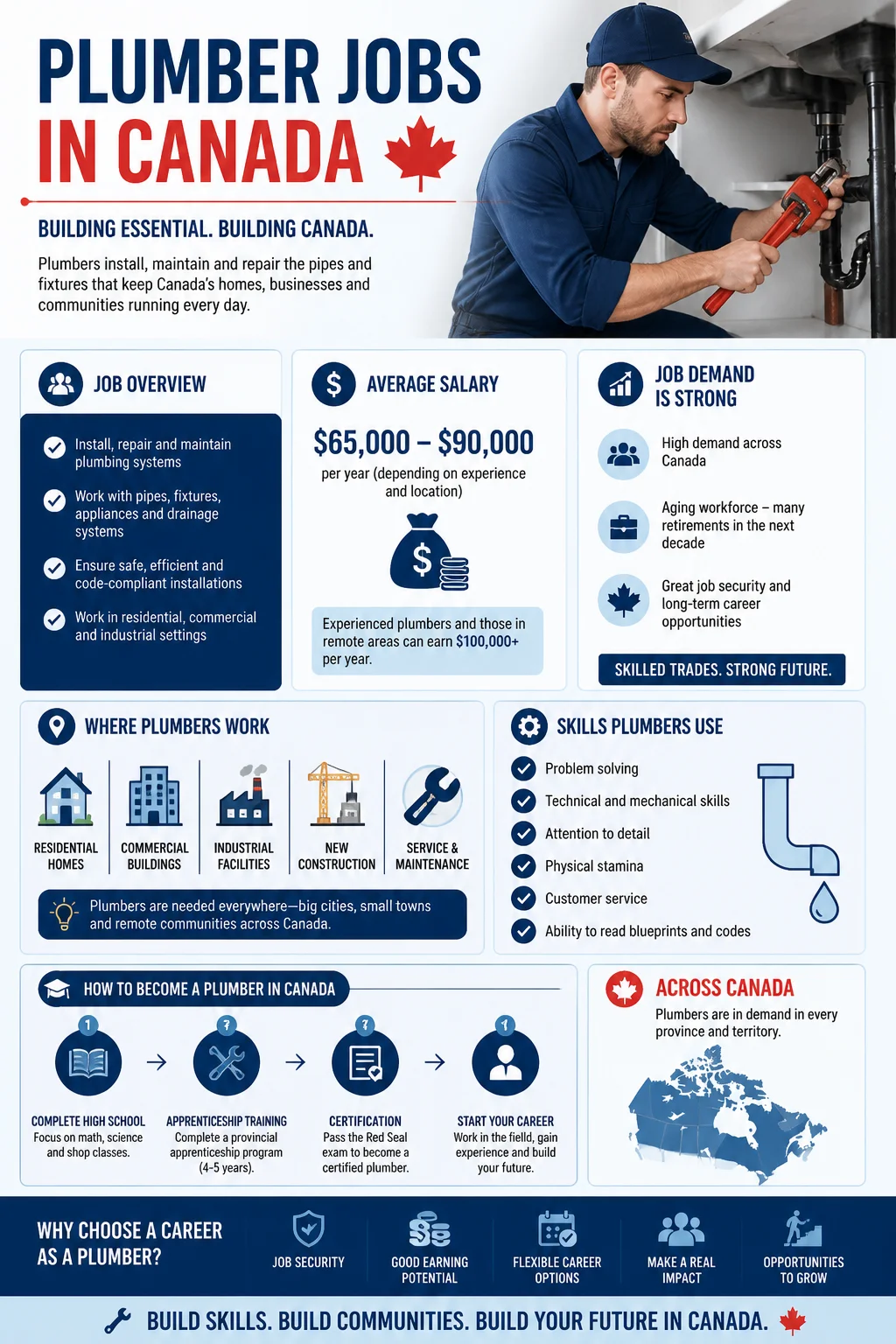
You can't just show up and start fixing pipes. Most provinces want you to go through an apprenticeship first. Four years is the usual stretch, and that includes both school time and on-the-job hours. Red Seal endorsement helps if you ever want to move provinces later. I know a guy who got his in BC then headed to Ontario with zero extra exams.
Thing is, some trade schools have waitlists now. Apply early or look into employer-sponsored programs where the company pays for part of your training.
How Much Do Plumbers Actually Make?
Entry level sits around 45k in smaller cities. Once you're licensed and a few years in, 75k to 95k becomes normal in most places. Union jobs or those in remote northern spots push past 110k with overtime. Benefits and pension plans kick in strong on the union side, which adds real value.
Honestly speaking, self-employed plumbers can clear more but you deal with chasing payments and buying your own tools and van. Not for everyone.
Where the Jobs Are Right Now
Construction booms in the Prairies keep creating openings. Vancouver and Toronto always need people for maintenance and service calls too. Smaller towns sometimes struggle to fill spots, which means faster advancement if you're willing to relocate.
- Check Indeed and local union halls first
- Company sites often post before the big boards do
- Word of mouth still lands plenty of roles
Look, the aging workforce means more retirements coming up. That creates steady demand even when the economy dips a bit.
What Daily Life Looks Like on the Job
Mornings start early. You might be crawling under houses one day and running new lines in a condo the next. Weather matters in Canada, especially if you're doing outdoor work in January. Customers range from chill homeowners to stressed project managers on tight deadlines.
Some days fly by. Others drag when parts don't show up on time. The physical side stays real, so staying in decent shape helps long-term.
Side Notes From People Already Doing It
One plumber I talked to said the best move he made was specializing in high-efficiency systems. Another focused on commercial work for steadier hours. Both said learning a bit of basic electrical opens extra doors without becoming a full electrician.
Not gonna lie, the job security feels solid compared to a lot of other fields. People always need water and drains working.